
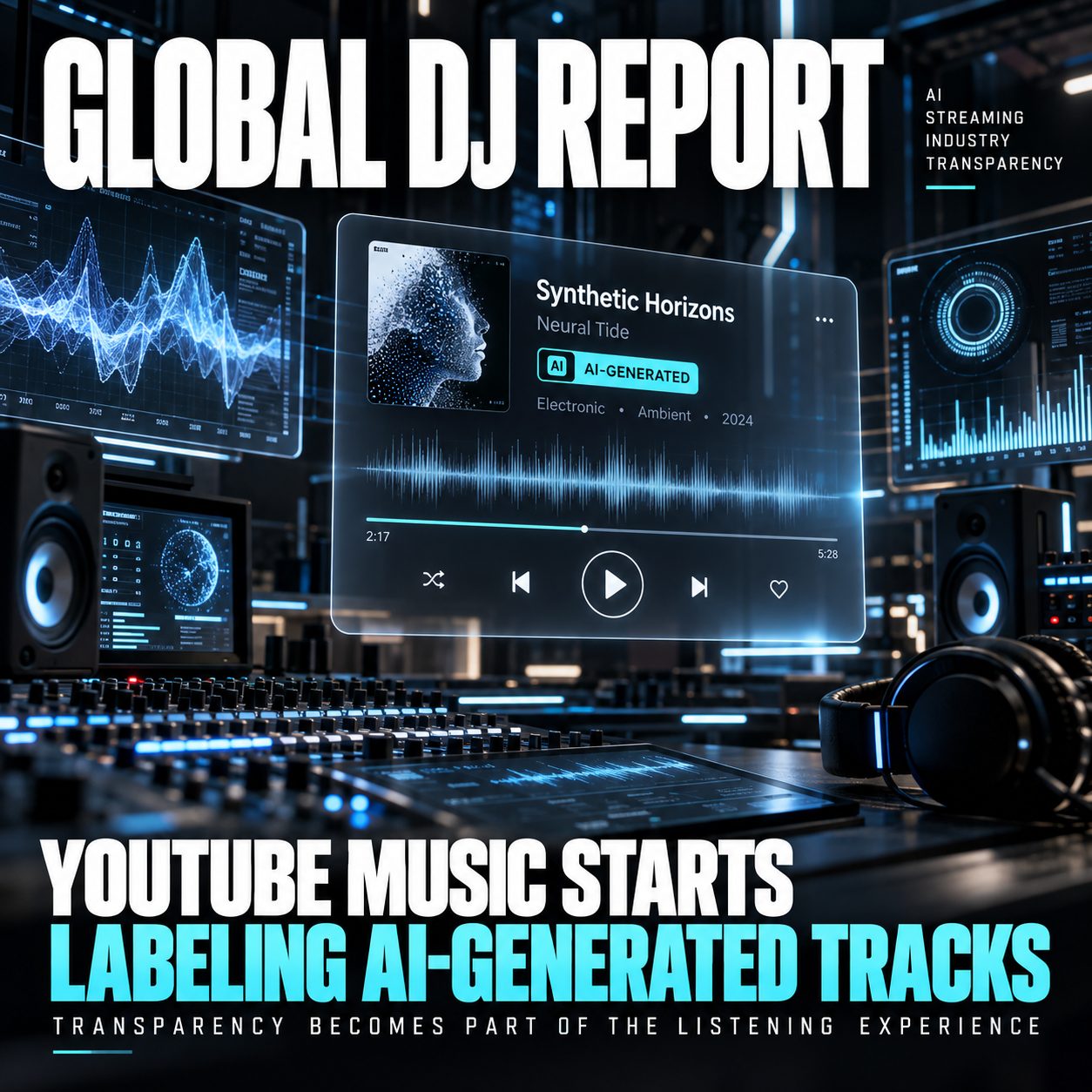
YouTube Music has begun rolling out new labels designed to identify tracks created primarily with generative AI, adding another major platform to the growing industry-wide debate around synthetic music, disclosure and listener trust.
The change was announced by YouTube on October 14 and is already being introduced directly inside the YouTube Music player. When AI has played a significant role in the creation of a track, listeners will now see a dedicated label that can be opened for additional information. blog.youtube
The system is intended to cover music in which generative tools have been used in a substantial way, including the creation of compositions or vocals.
For the electronic music industry, the move is particularly significant.
Dance music has always been closely connected to technology, from drum machines and samplers to software instruments and algorithmic production tools. Generative AI, however, introduces a different set of questions because it can potentially create entire songs, synthetic voices or artist-like performances with limited traditional human input.
YouTube is now trying to make that distinction more visible.
Transparency Becomes Part of the Listening Experience
The new label appears directly on the player page rather than being hidden inside extended metadata.
According to YouTube, listeners can tap the label to see more information about how AI was involved in the music. The company says the goal is to make it easier for users to understand what they are hearing without preventing AI-assisted music from being distributed. blog.youtube
That distinction matters.
YouTube is not presenting the system as a ban on AI music.
Instead, it is treating disclosure as an additional layer of information, similar to the way credits, explicit-content warnings or other metadata help listeners understand the context surrounding a release.
For artists and labels, this introduces another element into the release process.
Music partners are expected to provide information about generative AI use, while YouTube is also using internal detection systems to identify content when necessary. blog.youtube
AI Is Becoming an Industry Infrastructure Question
The debate around AI-generated music has quickly moved beyond novelty.
Streaming platforms, distributors, labels and rights organisations are increasingly dealing with questions around authorship, royalties, impersonation, ownership and the sheer volume of machine-generated tracks entering digital catalogues.
YouTube's latest step shows that the issue is now becoming part of normal platform infrastructure rather than an experimental policy area.
The company had already expanded AI disclosure systems earlier in 2026 for video content, including more visible labels and automatic detection signals for significantly AI-generated or altered material. blog.youtube
Applying a dedicated approach to music now brings those policies closer to the realities of the streaming ecosystem.
For DJs, producers and independent labels, the implications could become important.
If listeners begin using AI labels as part of how they judge authenticity or artistic identity, disclosure may affect how releases are perceived even when there is nothing technically wrong with using AI tools.
The Question Is No Longer Whether AI Will Be Used
Generative technology is already becoming part of music production.
The more important question is how much audiences should know about that process.
There is a large difference between using AI as one tool inside a human-led production workflow and generating the majority of a song through an automated system.
Until now, that distinction has often been invisible to the listener.
YouTube Music is attempting to make it visible.
That could create pressure for other platforms to introduce increasingly detailed disclosure systems of their own, especially as AI-generated music becomes more difficult to distinguish from traditional production.
For the music industry, transparency may therefore become one of the most important standards of the next phase of AI adoption.
Technology will continue to change how music is made.
The challenge now is ensuring listeners still understand who — or what — made the music they are hearing.