
For independent producers, one of the most valuable moments in a track’s life can also be one of the hardest to document.
A DJ plays your record.
The crowd reacts.
A video appears on social media.
Then the story disappears before the artist even realises what happened.
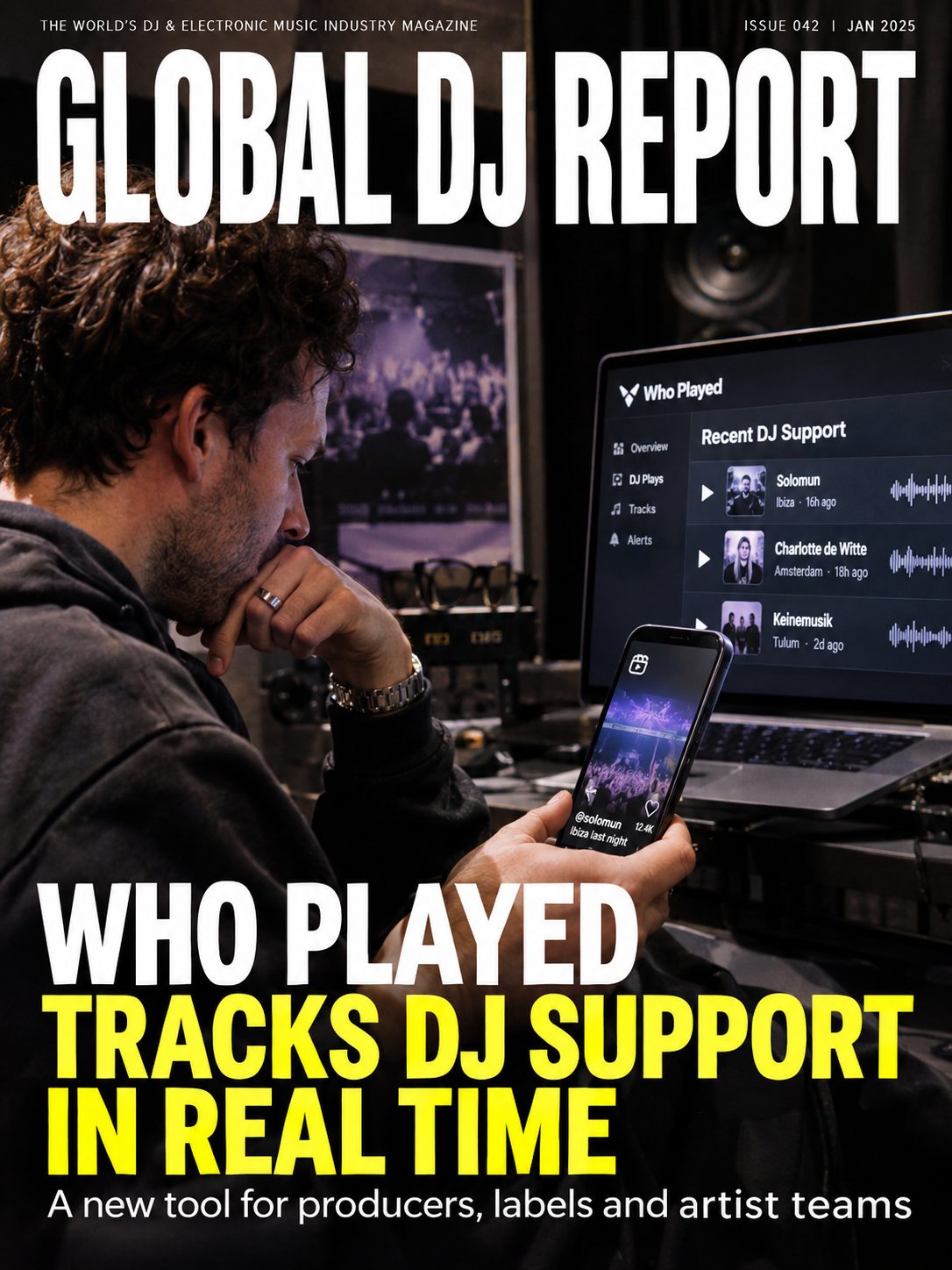
A new platform called Who Played is trying to change that.
Launched this week, the service is designed specifically for electronic music producers, labels and artist teams that want to know where their tracks are being played, by whom and in which social media content.
The idea is simple.
Artists upload a track, select the DJs or artists they want to monitor and let the system search social content for potential matches. When a track is detected, the user receives a notification accompanied by video evidence.
For electronic music, that could solve a very real industry problem.
DJ Support Is Valuable, but Often Invisible
Producer culture has always been built partly around support.
A record may receive its first major signal of momentum when a respected DJ begins playing it.
That support can influence labels, booking agents, promoters and other artists.
But tracking it has historically depended on luck.
Maybe someone tags the producer.
Maybe a fan identifies the track.
Maybe a promoter sends a video.
Or maybe nobody notices.
The situation becomes even more complicated with unreleased music.
IDs, private promos and edits can circulate through DJ sets for months before an official release, yet producers may have no structured way to understand where those records are travelling.
Who Played is designed around exactly that gap.
The platform can monitor both released and unreleased music, according to its launch information.
Upload the Track, Choose the DJs
The workflow is deliberately direct.
A producer uploads the music they want to monitor.
They then select specific DJs and artists.
The platform searches the social media activity of those accounts for matching audio.
When a match appears, Who Played sends the producer a notification together with the relevant video.
That changes the value of social content.
A random fifteen-second clip can become documented evidence that a particular artist supported a record.
For an emerging producer, that information can be extremely useful.
Not because one DJ play guarantees success.
It does not.
But several verified plays can begin to show a pattern.
Why This Matters to Independent Producers
Major labels and management companies can dedicate staff to monitoring artists, social media and DJ support.
Independent producers usually cannot.
Many are simultaneously writing music, sending promos, managing social profiles, communicating with labels and booking shows.
Monitoring dozens of DJ accounts every day is unrealistic.
Who Played is positioning itself as a way to automate part of that work.
The platform also offers a Team Plan, aimed at labels and artist teams that need to monitor multiple projects at once.
That makes the service relevant beyond individual producers.
A record label could potentially monitor several new releases simultaneously.
A management company could follow support for multiple artists.
A promo team could document evidence of a campaign as it develops.
The Industry Around Track Identification Is Growing
Who Played is entering an increasingly active space.
Other platforms are already trying to document the relationship between DJs and the records they play.
CrateWire’s Radar, for example, currently tracks social posts, stories and DJ sets across Instagram, TikTok, SoundCloud, YouTube and Mixcloud, monitoring more than 1,300 DJs and linking detected plays back to their source.
MixID approaches the problem from another direction, building databases around DJ sets, tracklists, artists, labels and festivals so listeners can trace where individual records have appeared.
This emerging category tells us something important.
Track discovery is becoming measurable.
From Anecdote to Data
Electronic music has traditionally depended on informal signals.
“Jamie Jones played it.”
“Someone heard it at DC-10.”
“There’s a video of it from Miami.”
These statements have always mattered inside club culture, but they are often difficult to verify.
Tools like Who Played are trying to convert those anecdotes into structured information.
That could have consequences beyond promotion.
If an artist can see which DJs are repeatedly supporting their music, they can understand which parts of the scene are responding.
If a label sees several artists from the same circuit playing one release, that can influence marketing.
If a booking agent notices a producer’s music spreading through a particular regional scene, that may become relevant to future touring.
The data does not replace artistic judgement.
But it adds context.
Unreleased Music Could Be Especially Important
One of the most interesting features is the ability to monitor unreleased tracks.
In electronic music, a record often develops its identity before release.
A DJ receives the promo.
They test it in a club.
Another artist requests it.
Videos begin circulating.
By the time the track arrives on streaming platforms, part of its story has already happened.
Being able to document that phase could be particularly valuable for producers trying to understand which tracks in their catalogue are gaining genuine momentum.
That information could also influence which record becomes the next single.
The Next Layer of Music Analytics
Streaming analytics already tell artists where listeners live, how many people are saving tracks and how releases perform after publication.
Who Played is focused on something different.
What happens before and around the streaming numbers.
Which DJs are actually playing the music?
Where is it appearing inside club culture?
Who is helping a track move from one scene to another?
Those questions have always mattered.
Now they are becoming part of a new generation of electronic music data tools.
For independent producers, that could make a major difference.
A DJ play used to disappear into the night.
Now there is a growing industry trying to make sure it leaves a trace.