
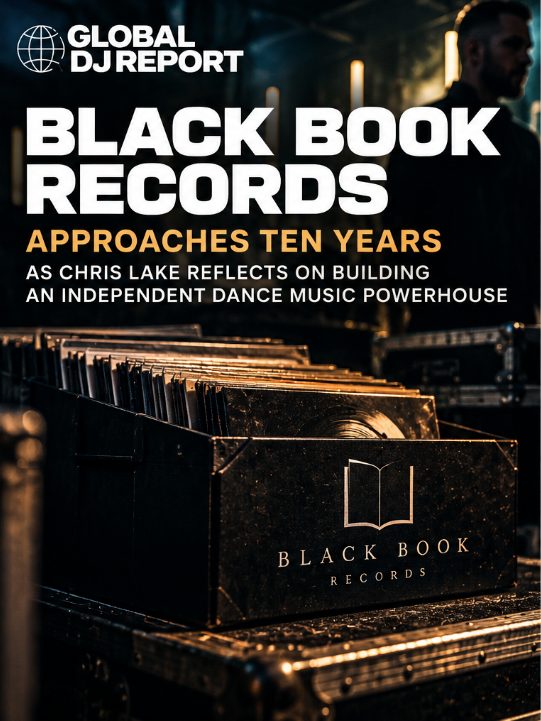
Chris Lake’s Black Book Records is approaching a major milestone.
The independent label will celebrate its tenth anniversary in December, closing a decade in which it has developed from a personal outlet for Lake’s music into one of the most visible independent platforms in contemporary house and electronic music. beatportal.com
Founded in 2016, Black Book emerged during a period when Lake was looking for greater control over how his music was released and developed.
Speaking to Beatportal ahead of the anniversary, the British producer described the creation of the label as partly driven by instinct and frustration with the traditional release process. What began as an artist-led solution gradually expanded into a wider operation capable of supporting other producers while retaining a clear club-focused identity. beatportal.com
That evolution mirrors a broader shift within electronic music.
For many internationally established DJs, record labels are no longer simply distribution channels. They have become creative ecosystems that can connect releases, events, artist development and community under one identity.
Black Book has become a particularly visible example of that model.
From Artist Platform to Independent Brand
Chris Lake’s own career remains closely connected to the imprint, but the importance of Black Book increasingly extends beyond its founder.
The label has developed a reputation for house records designed for large clubs and festival environments while providing a platform for new and established artists operating across different areas of modern dance music.
Its growth has happened during one of the most competitive periods in electronic music, when artists can distribute music independently but still face the challenge of building a recognisable audience around individual releases.
A successful label therefore offers something different from simple access to streaming platforms.
It provides context.
When listeners recognise an imprint, the label itself becomes part of the discovery process.
That relationship between curation and identity has helped independent electronic labels remain relevant even as the technical barriers to releasing music have largely disappeared.
Chris Lake’s Entrepreneurial Side
Lake has explained that his interest in entrepreneurship existed long before Black Book became an established brand.
In his recent Beatportal interview, he recalled telling his family that he wanted to become an entrepreneur even while he was still developing his career as a musician and DJ. beatportal.com
A decade later, that ambition has become tangible.
Black Book now operates in an environment where artist-owned labels can influence not only what music reaches dancefloors but also which emerging producers gain access to larger international audiences.
That position creates a different responsibility.
For a label to survive beyond the profile of its founder, it needs to develop an identity strong enough that listeners recognise the catalogue even when the biggest name is absent.
Black Book’s first decade suggests that the project has increasingly moved in that direction.
Independent Labels Still Matter
Electronic music has always been closely linked to independent labels.
From house and techno to drum & bass and trance, many of the genre’s most influential movements grew around imprints that functioned as communities before they became businesses.
The modern industry may look different, but that role has not disappeared.
Algorithms can recommend individual tracks, but they do not necessarily replace the sense of trust that develops when a listener repeatedly follows a particular label.
For producers, that identity can also provide a route into wider DJ networks, festivals and club circuits.
As Black Book Records approaches its tenth birthday, its story offers an example of how artist-led independence has evolved in the streaming era.
Chris Lake may have started the label as a way to gain control over his own creative direction.
Ten years later, Black Book has become something larger: an independent dance music brand with its own place inside the global house ecosystem.